
How does the menstrual cycle affect the health of your skin, hair, and nails?
29. June, 2026
Skincare
A woman’s body functions according to a monthly rhythmic biological clock, driven primarily by four hormones: estrogen, progesterone, luteinizing hormone (LH), and follicle-stimulating hormone (FSH). Although the primary purpose of these hormones is to regulate the reproductive system and prepare the body for a potential pregnancy, their influence extends far beyond that. Skin, hair, and nails are exceptionally hormone-sensitive tissues. Their cells contain numerous specific estrogen and progesterone receptors, meaning that hormonal fluctuations in the bloodstream are directly reflected in our appearance (Thornton, 2013).
Many women notice that one week their skin is completely clear and glowing, while the next week unexpected breakouts occur, hair gets greasy faster, and nails start to break. These are not random weather changes or the fault of using the wrong cream, but rather the body’s natural biochemical response to the different phases of the cycle.
1. Menstrual Phase (Days 1–5): Lowest hormone levels and skin barrier weakness
The first day of the cycle begins with bleeding. During this period, both estrogen and progesterone levels in the body drop to their lowest point of the month. Due to the lack of hormonal stimulation, several renewal processes occurring in the skin and its underlying tissues slow down.
Impact on Skin
Estrogen plays an irreplaceable role in maintaining skin hydration. It stimulates the activity of skin fibroblasts, which produce collagen, elastin, and hyaluronic acid. When estrogen levels drop, the skin’s ability to bind moisture decreases drastically. Studies confirm that low levels of estrogen and progesterone directly affect the properties of the epidermis, weakening the skin’s protective barrier function and reducing its natural hydration (Farage et al., 2009). The skin becomes dry, dull, and rough.
In addition, at the beginning of menstruation, levels of inflammatory mediators called prostaglandins rise in the body, making the skin more sensitive to touch, lowering the pain threshold, and making it more prone to redness and irritation.
Impact on Hair and Nails
Low estrogen levels also directly affect the synthesis of keratin, the main structural protein of hair and nails. During menstruation, nails may feel more brittle, drier, and prone to peeling than usual. Hair follicles enter a more passive phase, causing hair to lose its natural shine and volume, looking flat. The scalp can also become itchy or sensitive due to dryness.
How to Support Your Skin
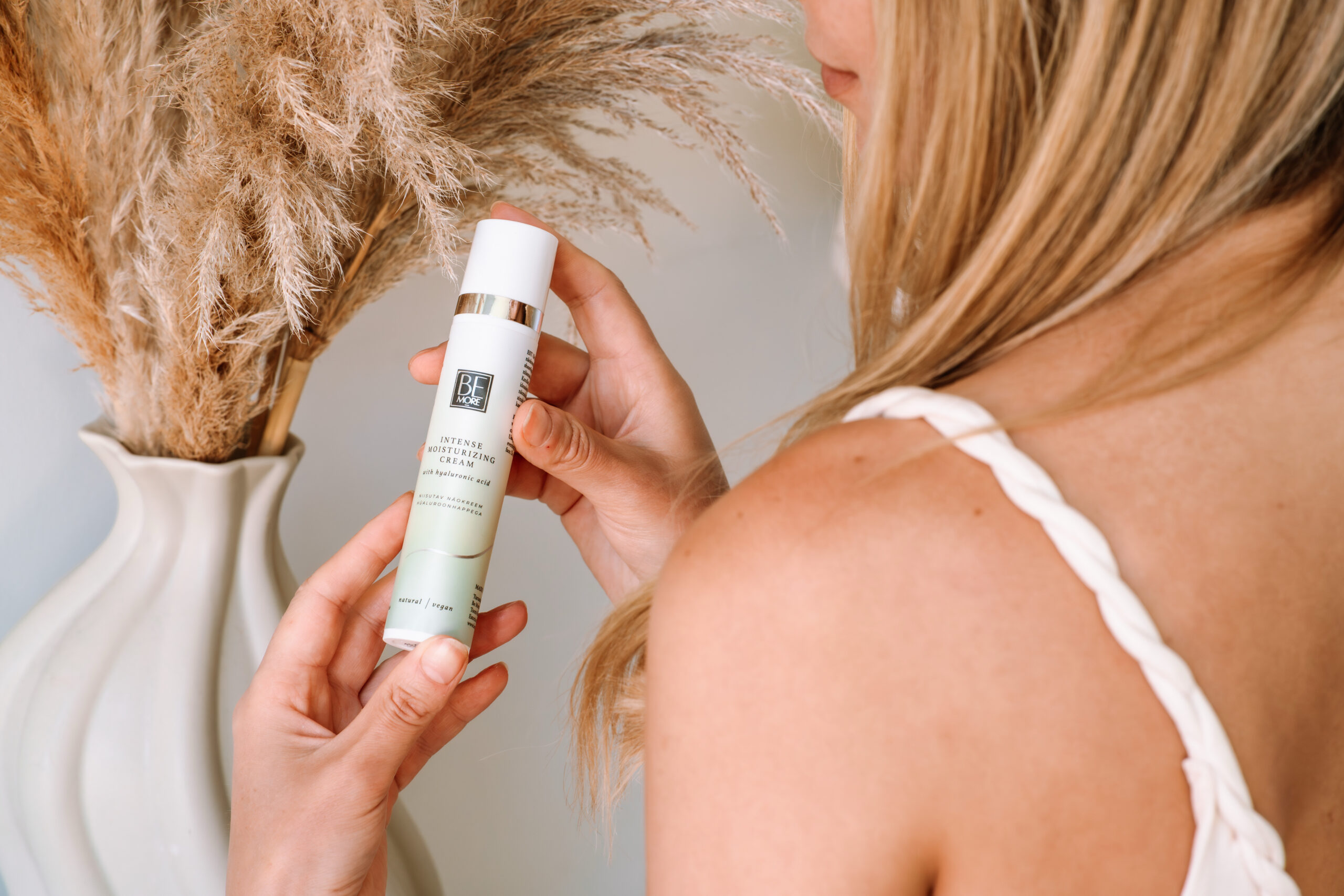
During this period, the skin needs exceptionally intense external hydration, soothing, and support for its protective barrier. Be More beauty products offer ideal support for this critical time. This natural skincare line containing hyaluronic acid helps restore the skin’s moisture balance, relieves the feeling of tightness caused by dryness, and soothes and nourishes the skin’s surface just when the body’s own hormonal defense is minimized.
2. Follicular Phase (Days 6–13): Estrogen rise and skin renewal
After bleeding stops, the pituitary gland begins to produce follicle-stimulating hormone (FSH), which signals the ovaries to start maturing a new egg. During this process, estrogen (especially estradiol) levels in the blood begin to rise steadily and rapidly.
This period is deservedly called the skin’s “golden week,” because rapidly rising estrogen levels work true wonders for our appearance. The production of new collagen fibers accelerates, making the skin noticeably firmer, more elastic, and stronger. As the body’s own hyaluronic acid production also recovers, the skin is once again able to bind water effectively. The complexion becomes even and fresh, the skin is deeply hydrated, and pores appear visually smaller.
At the same time, the best period for hair and nails arrives. High estrogen levels extend the active growth phase of hair, making it grow faster, stay vibrant, and acquire a beautiful shine, as a healthy scalp produces just the right amount of protective sebum. The nail plate also strengthens, becomes more flexible, and any risk of breaking or peeling is minimized.
3. Ovulation Phase (Around Day 14): The peak of biological glow
Just before ovulation, estrogen levels reach their peak, and a short-term surge of luteinizing hormone (LH) occurs, triggering the release of the egg from the ovary.
This is the moment when a woman’s skin is biologically at its most beautiful. The skin is maximally hydrated, and blood circulation in the superficial layers of the skin is optimal, ensuring a healthy and flushed complexion. Since testosterone levels also experience a slight increase, sebum production may increase slightly, but at this stage, it only gives the skin a beautiful glow without causing clogging. Hair is vibrant and easy to manage.
4. Luteal Phase (Days 15–28): Premenstrual challenges
After ovulation, the empty follicle forms the corpus luteum, which begins to produce progesterone. In the first half of the luteal phase, progesterone levels rise high, while estrogen undergoes a temporary drop followed by a slight second rise. If the egg is not fertilized, both hormones drop sharply at the end of the phase (around days 22–28).
Progesterone has the exact opposite effect on the skin compared to estrogen. It strongly stimulates the activity of the sebaceous glands, causing an overproduction of sebum. At the same time, high levels of progesterone cause slight fluid retention and tissue swelling in the body, which compresses the pore openings, making them narrower.
When excess thick sebum and dead skin cells that haven’t been shed in time from the skin’s surface get trapped in the narrowed pores, an oxygen-free environment is created. This is the perfect breeding ground for acne bacteria to thrive. It is precisely 7–10 days before menstruation that many women experience painful, deep, and hormonal inflammations and breakouts, often concentrated on the chin and jawline. In the final days of the cycle, when progesterone also drops, the skin’s protective layer completely disappears, leaving the skin both greasy and, in some places, dry and inflamed.
Impact on hair and nails
At the end of the luteal phase, the scalp can quickly become greasy and heavy due to excessive sebum production, requiring more frequent washing. Hair tends to look flat, losing its natural volume and becoming lifeless. Meanwhile, the body’s overall water content decreases and the skin barrier weakens, making cuticles prone to drying out, splitting, and becoming painful. This, in turn, inhibits the healthy and strong growth of the nail plate.
How to support beauty from the inside out and outside in
Since topical cosmetics (creams, serums) primarily affect and protect the outermost layer of the skin—the epidermis—the true key to coping with hormonal fluctuations lies in a two-pronged approach. To nourish the deeper layers of the skin (the dermis), the right nutrients must be taken from within, while supporting the skin’s surface protective barrier from the outside. For the best results, it is worth combining correct nutrition with high-quality external care.
1. Collagen Peptides and Skin Elasticity
Since estrogen fluctuations and drops at the end and beginning of the cycle reduce collagen synthesis, regular consumption of hydrolyzed collagen helps stimulate the body’s own collagen production. This helps maintain skin elasticity, strengthens the skin barrier, and reduces the skin dryness and sensitivity characteristic of the luteal and menstrual phases. The collagen blends in the Be More selection are enriched with natural superfoods and vitamins, providing the body with pure collagen peptides and antioxidants to nourish and maintain the vitality of hair, skin, and nails.
2. Antioxidants and Reducing Inflammation
Vitamins C and E, along with zinc, are powerful weapons against premenstrual acne. They help neutralize free radicals and reduce systemic inflammation in the body, which prevents clogged pores from turning into painful acne breakouts. Vitamin C is also an essential cofactor for stable collagen synthesis.
3. Minerals and Vitamins for Hair and Nails
Biotin, selenium, and zinc are indispensable elements in the creation of keratin and new cell structures. They ensure that nails stay strong and do not start breaking during the low phases of the cycle, and that hair roots receive enough nutrients even when blood circulation and hormonal levels are unstable. Explore the mineral blends and biotin-rich products available in the Be More selection.
4. External Care Support for Your Skin
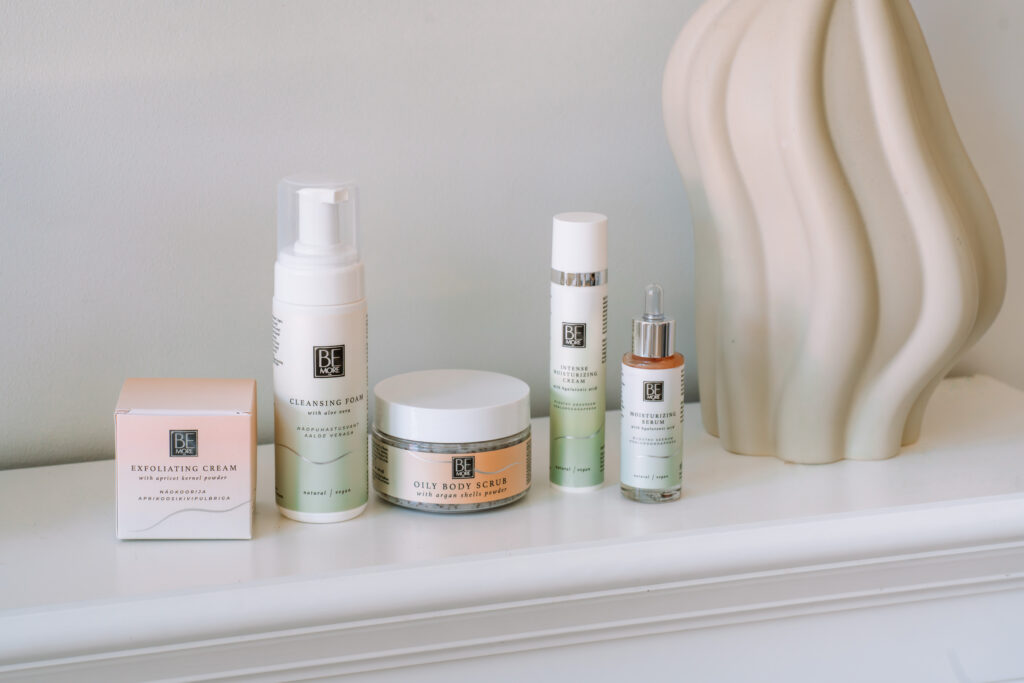
Natural and vegan-friendly Be More beauty products offer your skin exactly the kind of gentle yet effective care it needs most during hormonal fluctuations. Because the skin constantly reacts to changing hormone levels throughout the cycle—becoming dry and sensitive at one point, and oilier at another—it is crucial to choose products that support the skin’s natural renewal without causing additional stress. The Be More skincare line is dermatologically tested and created on the principle that external beauty begins with strengthening the skin’s superficial protective barrier and deep hydration.