
Biotin. Why is it called the vitamin of beauty and metabolism?
26. February, 2026
Lifestyle
Biotin is a vitamin that is most often talked about in connection with the health of hair, skin, and nails, but in reality its role in the human body is much broader and more important. Biotin belongs to the group of B vitamins and is also known as vitamin B7. It is a water-soluble vitamin that the body hardly stores, which means it needs to be obtained regularly from food or supplements.
Biotin takes part in many vital metabolic processes. Without sufficient biotin, the metabolism of carbohydrates, fats, and proteins does not function properly. This means that biotin directly affects how the body produces energy, how cells renew themselves, and how the nervous system and skin function.
What role does biotin play in the body?
The main role of biotin is to act as a cofactor, or helper, for enzymes involved in breaking down nutrients and producing energy. In practice, this means that biotin helps convert carbohydrates, fats, and proteins from food into usable energy for the body. If there is too little biotin, these processes may slow down, and a person may feel tired, weak, and generally lacking in energy.
In addition to metabolism, biotin is also very important for normal cell function. It supports the nervous system, helps maintain healthy mucous membranes and skin, and participates in gene regulation. This is why biotin is often associated with overall well-being and mental balance.
Biotin and the health of hair, skin, and nails
Biotin is best known as a “beauty vitamin.” Many people start using biotin when their hair becomes brittle, falls out more than usual, or when their nails break easily. Biotin is involved in the production of keratin, and keratin is the main structural protein that makes up hair, nails, and the outer layers of the skin.
When biotin levels in the body are sufficient, hair can grow stronger and more elastic, nails become more resilient, and the skin looks more even and healthy. Biotin is not a miracle cure that fixes everything overnight, but with long-term and consistent use it can have a noticeable supportive effect, especially if there has been a deficiency before.
How biotin deficiency can show itself
Biotin deficiency is not very common, but it is certainly possible, especially under certain lifestyles or health conditions. At first, the symptoms can be quite vague. Fatigue, muscle pain, low mood, and loss of appetite are common. With a longer-lasting deficiency, skin problems such as dryness, flaking, or rashes may occur, as well as thinning hair and weakened nails.
Some people may also experience symptoms related to the nervous system, such as irritability, difficulty concentrating, or even mild depressive moods. Since biotin is involved in the metabolism of nerve cells, this connection is not surprising.
Which foods contain biotin?
Biotin can be found in many everyday foods. Good sources include eggs, nuts, seeds, whole grains, legumes, liver, and some vegetables. In addition, gut bacteria produce some biotin, although this amount may not always be enough to cover the body’s total needs.
A balanced and varied diet usually covers biotin requirements. However, higher needs may occur in pregnant and breastfeeding women, athletes, people with digestive problems, and those who use certain medications for a long time.
When might it make sense to take biotin as a supplement?
Biotin is often used as a dietary supplement to support the condition of hair, skin, and nails, or when there is a suspicion that the amount obtained from food is not sufficient. Biotin may also be helpful during periods of intense physical or mental stress, when metabolism is working under greater load.
It is important to understand that biotin does not replace a varied diet but rather acts as a supportive addition. The best results come when it is combined with healthy eating, sufficient sleep, and stress reduction.
Can you take too much biotin?
Since biotin is a water-soluble vitamin, excess amounts are generally excreted from the body in urine. For this reason, biotin is considered relatively safe even in higher doses. However, it is not sensible to take very large amounts without a good reason, especially over a long period.
In some cases, high doses of biotin can affect the results of certain laboratory tests, such as measurements of thyroid or cardiac markers. Therefore, it is always a good idea to consult a doctor or pharmacist if you plan to use biotin in high doses for a longer time.
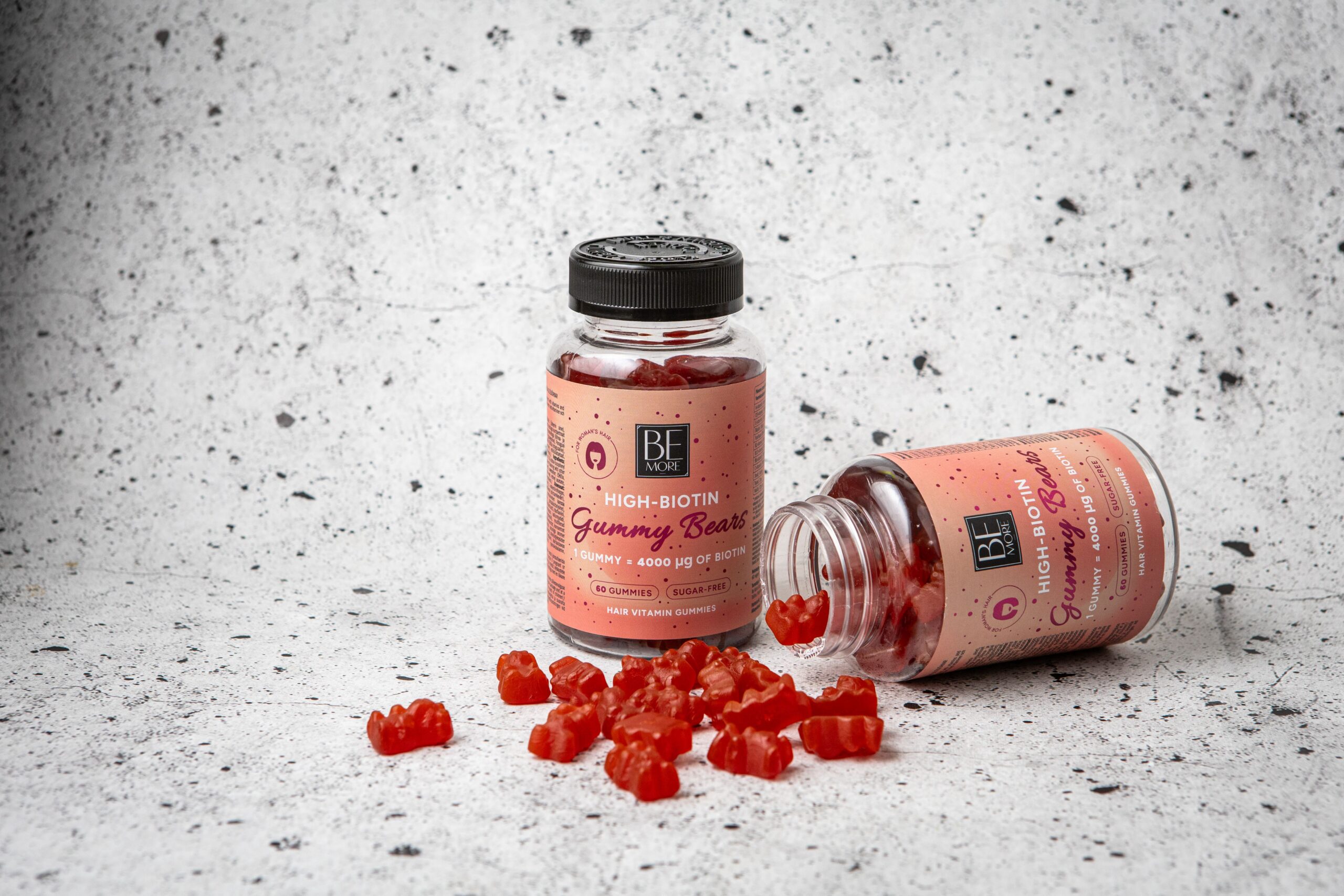
Be More biotin gummies. An easy and tasty support for beauty
Be More biotin gummies are a convenient and tasty way to support your daily biotin intake, especially for those who do not like tablets or capsules. These vegan and sugar-free gummies are designed with the health of hair, skin, and nails in mind and contain a high dose of biotin along with other carefully selected vitamins that support the body’s natural beauty processes from within.
Thanks to their pleasant taste and easy use, they are simple to make part of your daily routine to support both a beautiful appearance and overall well-being.